
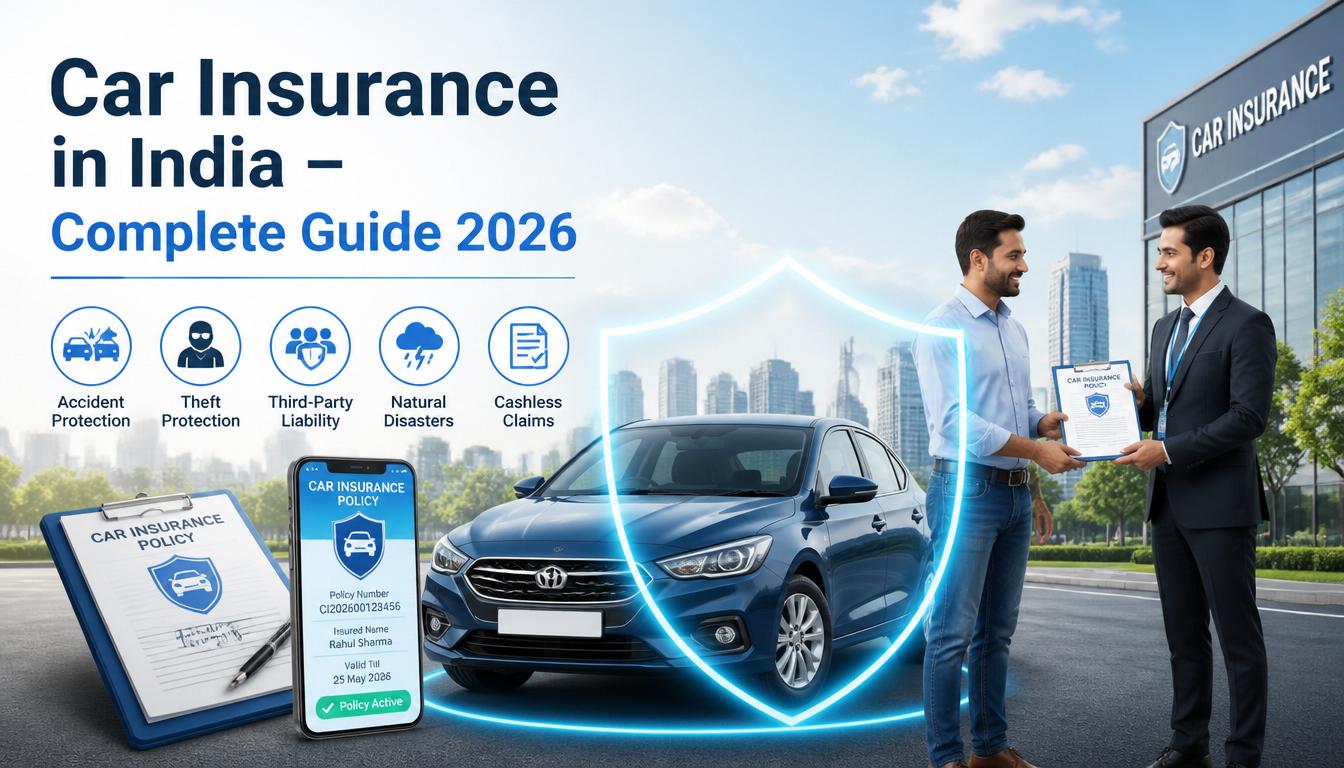
Owning a car offers convenience, freedom, and comfort, but it also comes with responsibilities. One of the most important responsibilities is ensuring that your vehicle is adequately insured. While many car owners purchase insurance simply because it’s a legal requirement, a good car insurance policy does much more than help you comply with the law. It protects you from unexpected financial losses caused by accidents, theft, natural disasters, fire, and third-party liabilities.
In India, even a minor road accident can result in expensive repair bills, while a major collision or vehicle theft can lead to losses worth several lakhs. Without proper insurance coverage, these expenses must be paid entirely from your own pocket. That’s why choosing the right car insurance policy is one of the smartest financial decisions a vehicle owner can make.
What Is Car Insurance?
Car insurance is a legal agreement between a vehicle owner and an insurance company. Under this agreement, the policyholder pays a premium, and in return, the insurer provides financial protection against covered risks during the policy period.
Depending on the type of policy, car insurance can cover:
- Damage to your own vehicle
- Third-party property damage
- Bodily injury or death of a third party
- Theft of the insured vehicle
- Fire-related damage
- Natural calamities such as floods, cyclones, earthquakes, and landslides
- Man-made incidents like riots or vandalism
In India, at least Third-Party Car Insurance is mandatory under the Motor Vehicles Act, 1988 for every vehicle driven on public roads. Driving without valid insurance can result in penalties and legal consequences.
However, while third-party insurance satisfies the legal requirement, many vehicle owners choose comprehensive insurance because it also protects their own vehicle.
Why Is Car Insurance Important?
Many people think of insurance as an unnecessary expense until an accident occurs. In reality, car insurance acts as a financial safety net that protects you from sudden and often substantial repair costs.
Imagine your car is severely damaged in an accident, stolen from a parking area, or affected by flooding after heavy rainfall. Repairing or replacing the vehicle could cost several lakhs. With an appropriate insurance policy, most of these expenses can be significantly reduced.
Car insurance also offers peace of mind. Instead of worrying about unexpected financial burdens, you can focus on getting your vehicle repaired and back on the road.
Apart from financial protection, insurance helps simplify legal liability if your vehicle causes damage to another person’s property or injuries during an accident.
Types of Car Insurance Policies in India
Not every driver requires the same level of protection. Insurance companies offer different policy types to suit different vehicles, budgets, and driving habits.
Understanding these options helps you choose the right coverage instead of paying for features you may never use.
Third-Party Car Insurance
Third-party car insurance is the minimum insurance required by law in India. Every vehicle owner must have this policy before driving on public roads.
This policy covers financial liabilities arising from damage caused to another person’s property, vehicle, or life because of an accident involving your insured vehicle.
However, it does not cover damage to your own vehicle.
For example, if your car collides with another vehicle and damages it, your third-party policy can compensate the affected party according to the applicable terms. But the repair expenses for your own car must be borne by you.
The premium for third-party insurance is regulated by the Insurance Regulatory and Development Authority of India (IRDAI). As a result, insurers charge similar third-party premiums based on the vehicle’s engine capacity.
Third-party insurance is generally suitable for:
- Very old vehicles
- Cars with low market value
- Owners seeking only legal compliance
Comprehensive Car Insurance
Comprehensive insurance is the most popular type of car insurance in India because it offers complete protection.
In addition to third-party liability, it also covers damage to your own vehicle caused by accidents, fire, theft, natural disasters, riots, vandalism, and several other insured events.
Unlike third-party insurance, comprehensive coverage protects your investment in the vehicle itself.
Most banks and financial institutions require financed vehicles to remain covered under comprehensive insurance until the loan is fully repaid.
Although comprehensive insurance costs more than third-party insurance, it provides significantly broader financial protection and greater peace of mind.
It is generally recommended for:
- New cars
- Premium vehicles
- Financed vehicles
- Daily commuters
- Cars with high resale value
Standalone Own Damage Insurance
Standalone Own Damage (OD) insurance covers only damage to your own vehicle.
This policy can be purchased only if you already have an active third-party insurance policy.
Many car owners purchase standalone OD insurance after the mandatory long-term third-party policy issued with a new vehicle continues to remain valid.
Standalone OD policies cover:
- Accident damage
- Fire
- Theft
- Natural disasters
- Man-made disasters
However, they do not include third-party liability protection.
Difference Between the Three Policy Types
Understanding the difference between policy types helps you avoid purchasing unnecessary coverage.
Third-party insurance provides only legal liability protection.
Comprehensive insurance combines third-party liability with own-damage protection, making it the most complete policy available.
Standalone Own Damage insurance protects your own vehicle but requires an active third-party policy separately.
The right choice depends on your vehicle’s age, value, usage, and personal financial preferences.
Third-Party Premium Rates in India
Unlike comprehensive insurance, third-party insurance premiums are regulated by the Insurance Regulatory and Development Authority of India (IRDAI). This means every insurer follows the same premium structure for vehicles within the same engine capacity category.
Generally:
- Cars below 1000 cc attract the lowest third-party premium.
- Vehicles between 1000 cc and 1500 cc fall into the middle premium category.
- Cars above 1500 cc have the highest third-party premium.
Since these premiums are standardized, comparing insurers for third-party insurance alone offers little advantage. However, comprehensive insurance premiums vary considerably because insurers determine their own own-damage rates.
This makes comparing multiple comprehensive insurance quotes extremely important before making a purchase.
Understanding Insured Declared Value (IDV)
One of the most important terms in car insurance is Insured Declared Value (IDV).
IDV represents the current market value of your vehicle after depreciation and serves as the maximum amount the insurer will pay if the vehicle is declared a total loss or is stolen.
Insurance companies calculate IDV by applying depreciation to the vehicle’s original ex-showroom price based on its age.
As the vehicle gets older, depreciation increases and the IDV gradually decreases.
Many policyholders intentionally choose a lower IDV to reduce their insurance premium. While this may save money during purchase, it can significantly reduce compensation if the vehicle suffers total damage or theft.
Choosing an appropriate IDV ensures that your insurance coverage accurately reflects the value of your vehicle.
Factors That Affect Car Insurance Premium
No two vehicles receive exactly the same insurance premium. Insurance companies evaluate several factors before calculating the final premium.
Some of the most important factors include:
- Vehicle make and model
- Engine capacity
- Age of the vehicle
- City of registration
- Insured Declared Value (IDV)
- Type of insurance policy
- Previous claim history
- No Claim Bonus (NCB)
- Selected add-on covers
- Anti-theft devices
- Voluntary deductible
Understanding these factors can help you make informed decisions and potentially reduce your insurance costs without compromising essential coverage.
How to Buy Car Insurance Online
Buying car insurance online has made the process faster, more transparent, and more convenient than ever before. Instead of visiting multiple insurance offices, you can compare policies, premiums, coverage, and customer reviews from different insurers within a few minutes.
However, purchasing the cheapest policy isn’t always the smartest decision. The right insurance policy should offer adequate coverage, a strong claim settlement record, an extensive cashless garage network, and useful add-on covers that suit your driving needs.
Following a systematic approach can help you choose the best policy without overpaying.
Step 1: Decide the Type of Insurance
The first step is choosing the right type of policy.
If you own a new car, a premium vehicle, or a car purchased through a loan, comprehensive insurance is usually the best choice because it provides protection for both your own vehicle and third-party liabilities.
Owners of older cars with low market value may prefer third-party insurance if they only want to meet the legal requirement.
If your vehicle already has a valid third-party policy, you can also purchase a Standalone Own Damage policy for additional protection.
Step 2: Enter Correct Vehicle Details
The insurance premium is calculated based on your vehicle information.
You will usually need to provide:
- Vehicle registration number
- Make and model
- Variant
- Fuel type
- Registration year
- Previous insurance details
Entering incorrect information may lead to claim rejection or policy corrections later.
Step 3: Compare Multiple Insurance Quotes
One of the biggest advantages of buying insurance online is the ability to compare multiple insurers before making a decision.
While third-party premiums remain regulated, comprehensive insurance premiums vary significantly because every insurer has its own pricing model.
While comparing policies, don’t focus only on the premium amount. Also compare:
- Coverage offered
- Claim settlement ratio
- Cashless garage network
- Customer support
- Add-on availability
- Policy exclusions
A slightly higher premium may provide substantially better coverage and faster claim assistance.
Step 4: Select Suitable Add-On Covers
Add-on covers increase the scope of protection offered by a comprehensive policy.
Although they increase the premium slightly, they can save a significant amount during claims.
Instead of selecting every available add-on, choose those that match your driving habits and vehicle usage.
Step 5: Make Payment and Verify the Policy
Once you’ve selected the right policy, complete the payment through the insurer’s secure payment gateway.
After receiving the policy document, carefully verify:
- Vehicle registration number
- Owner details
- Engine and chassis numbers
- IDV
- Policy period
- Selected add-ons
If you notice any errors, request corrections immediately.
Car Insurance Add-On Covers You Should Know
Standard comprehensive insurance offers good protection, but certain situations require additional coverage. This is where add-ons become valuable.
Choosing the right add-ons can reduce your out-of-pocket expenses during claims and improve overall protection.
Zero Depreciation Cover
During a normal insurance claim, depreciation is deducted from replaced vehicle parts.
A Zero Depreciation Cover removes this deduction, allowing the insurer to pay a much larger portion of the repair cost.
This add-on is highly recommended for:
- New cars
- Cars less than five years old
- Premium vehicles
Engine Protection Cover
Engine repairs are among the costliest vehicle repairs.
Standard comprehensive insurance generally does not cover engine damage caused by water entering the engine or oil leakage.
Engine Protect Cover fills this gap and is especially useful for people living in flood-prone cities.
Roadside Assistance
Vehicle breakdowns can happen unexpectedly.
Roadside Assistance provides services such as:
- Towing
- Flat tyre assistance
- Battery jump-start
- Fuel delivery
- Minor on-site repairs
- Emergency support
This cover is particularly beneficial for people who frequently travel long distances.
Return to Invoice Cover
In case of total loss or theft, insurers usually compensate based on the vehicle’s IDV.
Return to Invoice Cover bridges the gap by paying the original invoice value instead of the depreciated amount, subject to policy terms.
It is especially useful for:
- Brand-new cars
- Expensive vehicles
- Financed cars
No Claim Bonus Protection
Normally, filing an insurance claim affects your accumulated No Claim Bonus.
NCB Protect allows you to retain your bonus even after making a limited number of claims, depending on the policy conditions.
Consumables Cover
Many repair expenses involve items such as:
- Engine oil
- Coolant
- Nuts and bolts
- Brake oil
- Grease
These consumables are usually excluded from standard insurance.
Consumables Cover includes these expenses, reducing your final repair bill.
What Is No Claim Bonus (NCB)?
One of the biggest rewards for safe driving is the No Claim Bonus (NCB).
NCB is a discount offered on the Own Damage premium for every claim-free policy year.
The longer you avoid making claims, the larger your discount becomes.
Typically, the discount increases progressively and can reach up to 50% after several consecutive claim-free years.
This makes NCB one of the most valuable long-term benefits of maintaining a good driving record.
Important Facts About NCB
Many policyholders mistakenly believe that NCB belongs to the vehicle.
In reality, the bonus belongs to the policyholder.
If you sell your existing car and purchase another one, your accumulated No Claim Bonus can usually be transferred to the new vehicle after following the insurer’s prescribed process.
However, allowing your insurance policy to lapse may result in losing this valuable benefit.
How to Renew Your Car Insurance
Many vehicle owners complete their car insurance renewal without comparing policies from different insurers. As a result, they may end up paying a higher premium for the same or even lower coverage.
Instead of auto-renewing your existing policy, treat every car insurance renewal as an opportunity to review your coverage and ensure you’re getting the best value for your money. Before renewing your policy, carefully check:
- Current Insured Declared Value (IDV)
- Selected add-on covers
- Claim history
- No Claim Bonus (NCB)
- Updated premium amount
Comparing multiple insurers during your car insurance renewal can help you find better coverage, competitive premiums, and additional benefits.
How to File a Car Insurance Claim
Knowing how to file a claim properly can significantly improve your chances of quick settlement.
After an accident:
- Inform your insurer immediately.
- Take photographs of the accident scene.
- Avoid moving the vehicle unless necessary.
- File an FIR if required.
- Wait for surveyor inspection before repairs (if applicable).
- Submit all required documents promptly.
Following the insurer’s instructions carefully helps prevent unnecessary delays.
Documents Required for Car Insurance Claims
Although documentation requirements vary, insurers generally request:
- Claim form
- Insurance policy copy
- Registration Certificate (RC)
- Driving Licence
- Repair estimates
- Original repair bills
- FIR (for theft or major accidents)
- Photographs of the damaged vehicle
Keeping digital copies of these documents can simplify the claim process.
Common Car Insurance Mistakes to Avoid
Many policyholders unintentionally make mistakes that either increase their premium or complicate claim settlement.
Some of the most common mistakes include:
- Buying insurance based only on the lowest premium.
- Choosing an unrealistically low IDV.
- Ignoring policy exclusions.
- Not comparing insurers before renewal.
- Allowing the policy to expire.
- Skipping useful add-ons for a new car.
- Starting repairs before insurer approval.
- Providing incorrect vehicle information.
- Not reading policy terms carefully.
Avoiding these mistakes can save both time and money in the long run.
Conclusion
Car insurance is much more than a legal requirement—it’s a financial safety net that protects you from the unexpected costs of accidents, theft, natural disasters, and third-party liabilities. Choosing the right policy involves more than comparing premiums; you should also evaluate coverage, claim settlement performance, network garages, IDV, and add-on options.
Whether you’re buying insurance for a new car or renewing an existing policy, taking a few extra minutes to compare plans and understand the fine print can make a significant difference when it’s time to file a claim. A well-chosen car insurance policy not only safeguards your vehicle but also gives you confidence every time you hit the road.
Also read: Monthly Car Rental in Dubai | Affordable & Flexible Plans
 admin
admin