
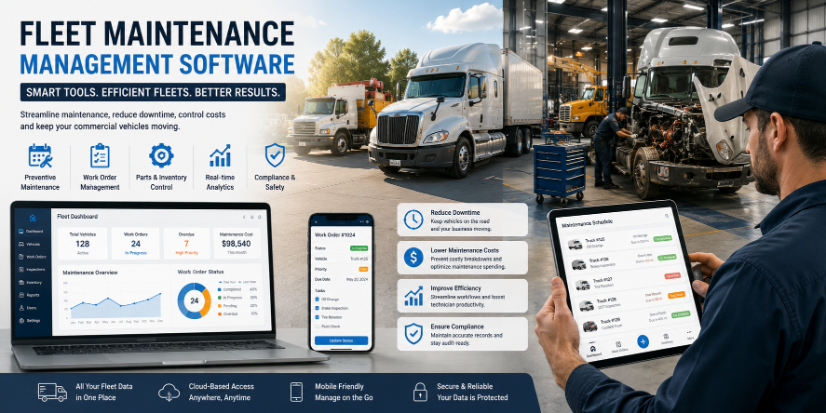
Managing commercial vehicles is a complex responsibility that goes far beyond scheduling repairs when something breaks. Modern fleets operate in highly competitive industries where vehicle uptime, operational efficiency, safety compliance, and cost control directly impact profitability. Whether a company manages a small group of service trucks or a large fleet of heavy-duty commercial vehicles, maintaining those assets effectively is essential for long-term success.
Traditionally, fleet managers relied on spreadsheets, paper records, and manual tracking systems to monitor maintenance activities. While these methods may work for smaller operations, they often become inefficient as fleets expand. Missed maintenance schedules, incomplete records, unexpected breakdowns, and communication gaps can quickly increase operating costs and reduce productivity.
This is where fleet maintenance management software becomes invaluable. By automating maintenance processes, centralizing vehicle information, and providing real-time visibility into fleet operations, these platforms help businesses manage commercial vehicles more efficiently. Companies that invest in the right software often experience reduced downtime, improved vehicle reliability, lower maintenance costs, and better overall fleet performance.
Understanding Fleet Maintenance Management Software
What Is Fleet Maintenance Management Software?
Fleet maintenance management software is a specialized digital solution designed to help organizations monitor, schedule, track, and manage vehicle maintenance activities. Instead of relying on multiple disconnected systems, fleet managers can access all critical maintenance data from a single platform.
The software stores important information such as service histories, inspection reports, repair records, maintenance schedules, work orders, inventory levels, and vehicle performance metrics. This centralized approach provides complete visibility into the health and status of every vehicle in the fleet.
Why Commercial Fleets Need Modern Maintenance Solutions
Commercial vehicles operate under demanding conditions. Delivery trucks travel hundreds of miles daily, construction vehicles work in harsh environments, and transportation fleets must meet strict schedules. These conditions place significant stress on vehicles and increase the likelihood of mechanical failures.
Without a structured maintenance strategy, minor issues can quickly develop into expensive repairs. Fleet maintenance management software helps organizations identify potential problems early, ensuring vehicles receive necessary maintenance before major failures occur.
Common Challenges in Commercial Vehicle Management
Unexpected Vehicle Breakdowns
One of the biggest challenges fleet managers face is unplanned downtime. A vehicle breakdown can disrupt schedules, delay deliveries, increase labor costs, and negatively affect customer satisfaction.
Unexpected repairs often cost significantly more than preventive maintenance because emergency service calls, towing expenses, and operational disruptions add to the total expense.
Increasing Maintenance Costs
The cost of maintaining commercial vehicles continues to rise due to increasing labor rates, advanced vehicle technologies, and fluctuating parts prices. Without proper maintenance tracking, organizations may struggle to identify cost-saving opportunities.
Fleet maintenance management software provides detailed cost analysis, allowing managers to understand where maintenance budgets are being spent and how expenses can be controlled.
Compliance and Safety Requirements
Commercial fleets must comply with various industry regulations related to vehicle safety, inspections, and maintenance documentation. Missing records or failing inspections can result in penalties, fines, and operational delays.
Maintaining accurate maintenance records manually can be time-consuming and prone to errors. Digital maintenance systems simplify compliance management by storing and organizing all required documentation.
Key Features of Fleet Maintenance Management Software
Preventive Maintenance Scheduling
Preventive maintenance is one of the most valuable capabilities offered by fleet maintenance management software. Instead of waiting for equipment failures, organizations can schedule maintenance activities based on mileage, engine hours, usage patterns, or manufacturer recommendations.
Regular maintenance tasks such as oil changes, tire rotations, brake inspections, fluid checks, and filter replacements can be automatically scheduled and tracked.
Automated Maintenance Alerts
Automated reminders ensure maintenance tasks are completed on time. Fleet managers receive notifications when services are approaching due dates, helping prevent missed maintenance intervals.
Work Order Management
Managing maintenance requests manually can create confusion and delays. Work order management features allow managers to create, assign, prioritize, and track repair activities efficiently.
Technicians can access work orders digitally, update repair progress, record labor hours, and document completed work directly within the system.
Vehicle Inspection Tracking
Routine inspections play a critical role in maintaining fleet safety and reliability. Fleet maintenance management software enables organizations to create digital inspection forms and store inspection results electronically.
This makes it easier to identify potential issues, track recurring problems, and maintain accurate inspection histories.
Inventory and Parts Management
Commercial fleets often maintain extensive inventories of spare parts and maintenance supplies. Tracking inventory manually can result in shortages, overstocking, and increased operational costs.
The software monitors inventory levels, tracks part usage, and helps ensure critical components remain available when needed.
Reporting and Analytics
Advanced reporting capabilities provide valuable insights into fleet performance. Managers can generate detailed reports covering maintenance costs, vehicle utilization, downtime trends, repair histories, and technician productivity.
These insights support more informed decision-making and continuous operational improvement.
How Fleet Maintenance Management Software Improves Efficiency
Reducing Vehicle Downtime
Vehicle downtime directly affects productivity and profitability. Every hour a commercial vehicle remains out of service represents lost revenue and operational disruption.
Fleet maintenance management software helps reduce downtime through proactive maintenance planning. By identifying maintenance needs before breakdowns occur, organizations can schedule repairs during planned service windows rather than responding to unexpected failures.
Improving Technician Productivity
Maintenance technicians perform more efficiently when they have access to accurate information and organized workflows.
Digital maintenance platforms eliminate much of the paperwork traditionally associated with maintenance operations. Technicians can access repair histories, work orders, service manuals, and inspection reports from mobile devices or workstation terminals.
This streamlined access to information reduces delays and allows technicians to focus more time on actual repairs.
Streamlining Maintenance Workflows
Many maintenance operations involve multiple stakeholders, including fleet managers, technicians, parts departments, and external service providers.
Fleet maintenance management software centralizes communication and documentation, ensuring everyone works from the same information. This reduces misunderstandings, improves accountability, and accelerates maintenance processes.
Enhancing Fleet Visibility
Fleet managers need a clear understanding of vehicle health, maintenance status, and operational performance.
Real-time dashboards provide visibility into maintenance schedules, overdue services, vehicle conditions, and repair activities. This allows managers to make informed decisions and respond quickly to emerging issues.
The Role of Automation in Modern Fleet Maintenance
Automated Scheduling
Manual scheduling often results in overlooked maintenance tasks and inconsistent service intervals. Automated scheduling eliminates these challenges by generating maintenance plans based on predefined criteria.
Vehicles receive maintenance at appropriate intervals, reducing the risk of mechanical failures and extending asset lifespan.
Predictive Maintenance Capabilities
Many modern systems incorporate predictive maintenance technologies that analyze vehicle data and identify patterns indicating potential failures.
By addressing issues before they become serious problems, organizations can avoid costly repairs and improve fleet reliability.
Digital Documentation
Maintaining accurate maintenance records is essential for compliance, audits, and performance analysis.
Automated recordkeeping ensures maintenance histories remain complete, organized, and easily accessible whenever needed.
Benefits for Fleet Managers and Business Owners
Better Cost Control
One of the primary benefits of fleet maintenance management software is improved financial visibility. Managers can monitor maintenance expenses across the entire fleet and identify opportunities to reduce costs.
Detailed reporting helps organizations determine which vehicles generate the highest maintenance expenses and whether replacements may be more cost-effective than continued repairs.
Extended Vehicle Lifespan
Regular maintenance significantly extends the useful life of commercial vehicles. By ensuring maintenance activities are performed consistently and on schedule, organizations maximize the return on their fleet investments.
Improved Safety
Properly maintained vehicles are safer for drivers, passengers, and the public. Routine inspections and preventive maintenance help identify safety concerns before they lead to accidents or equipment failures.
Enhanced Customer Satisfaction
Reliable vehicles contribute to consistent service delivery. When fleets experience fewer breakdowns and delays, customers receive better service and businesses strengthen their reputation.
In many heavy-duty repair operations, platforms such as Fullbay have become valuable tools for improving maintenance workflows, managing work orders, and supporting efficient fleet operations through centralized maintenance management.
Choosing the Right Fleet Maintenance Management Software
Assess Operational Requirements
Every fleet has unique needs based on vehicle types, fleet size, industry requirements, and maintenance complexity.
Organizations should evaluate their operational challenges and identify software features that directly support their goals.
Evaluate Integration Capabilities
The best software solutions integrate seamlessly with telematics systems, accounting platforms, fuel management tools, and other business applications.
Integration improves data accuracy and reduces administrative workload.
Consider Scalability
As fleets grow, maintenance requirements become more complex. Choosing scalable software ensures organizations can continue using the platform as operations expand.
Prioritize Ease of Use
Even the most advanced software delivers limited value if employees struggle to use it effectively. User-friendly interfaces and intuitive workflows encourage adoption and maximize return on investment.
Future Trends in Fleet Maintenance Technology
Artificial Intelligence and Machine Learning
Artificial intelligence is transforming fleet maintenance by enabling more accurate predictive maintenance models. These technologies analyze large volumes of vehicle data to identify maintenance needs before failures occur.
Cloud-Based Solutions
Cloud technology continues to gain popularity because it provides greater accessibility, flexibility, and scalability. Fleet managers can access maintenance information from virtually any location while reducing IT infrastructure costs.
Mobile-First Maintenance Management
Mobile applications are becoming increasingly important as technicians and managers require access to maintenance information in the field. Mobile solutions improve responsiveness and support real-time communication.
Advanced Data Analytics
Future maintenance platforms will continue expanding their analytical capabilities, providing deeper insights into vehicle performance, maintenance efficiency, and operational costs.
Conclusion
Efficiently managing commercial vehicles requires more than reactive repairs and basic recordkeeping. Modern fleets need comprehensive tools that provide visibility, automation, and data-driven decision-making capabilities. Fleet maintenance management software addresses these needs by centralizing maintenance operations, streamlining workflows, and supporting proactive maintenance strategies.
From reducing downtime and controlling costs to improving compliance and extending vehicle lifespan, the benefits of fleet maintenance management software are substantial. Organizations that embrace these solutions gain a competitive advantage through improved reliability, higher productivity, and stronger operational performance.
As commercial fleets continue to evolve, technology will play an increasingly important role in maintenance management. Businesses that invest in the right software today will be better positioned to improve efficiency, maximize vehicle performance, and achieve sustainable growth in the years ahead.
 admin
admin  Contributor