
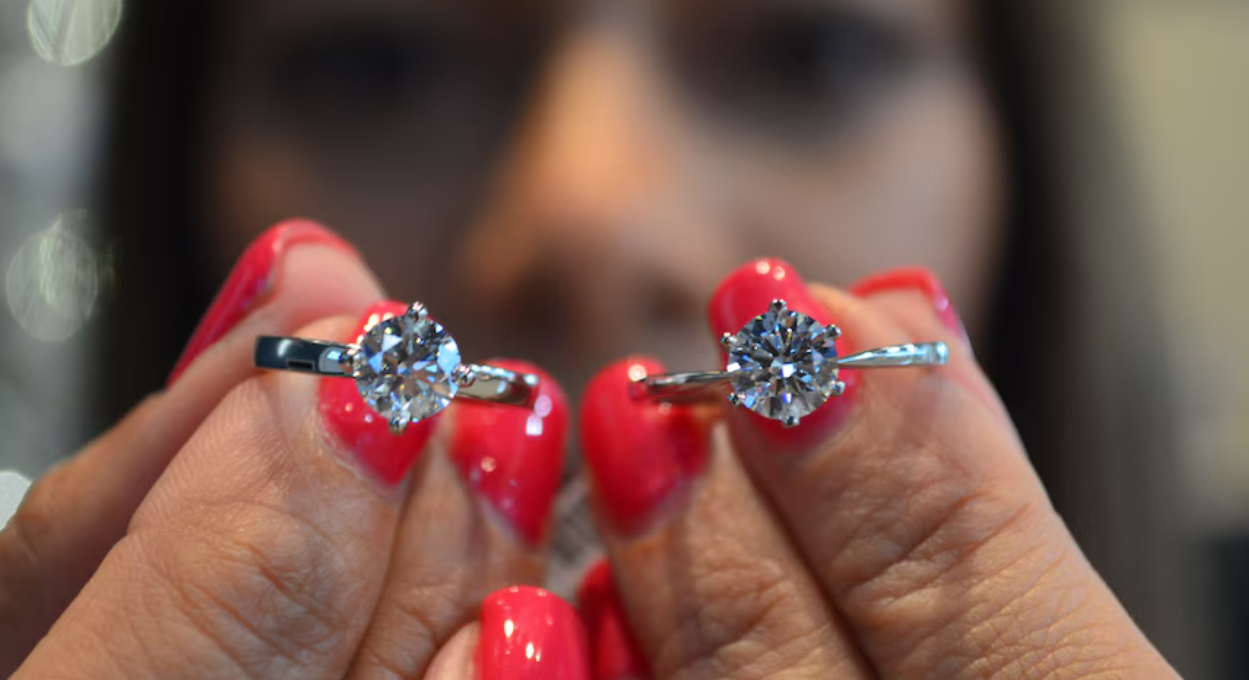
Picking an engagement ring can feel like a huge test. You want a ring your partner will love, one that fits your budget, and one that still feels right twenty years from now. For many people, lab engagement rings have become the answer to all three.
A lab-grown diamond ring gives you the look, strength, and sparkle of a mined diamond, usually at a much lower price. That opens the door to a bigger stone, a better setting, or simply a smarter spend. This guide walks through the facts, the choices, and the details that make the biggest difference.
Are Lab Engagement Rings Real Diamonds?
Yes. This is the most common question, and the answer is simple. Lab-grown diamonds are made of carbon atoms bonded in the same crystal structure as mined diamonds. They have the same hardness, the same refractive index, and the same brilliance.
In 2018, the Federal Trade Commission updated its jewelry guides and removed the word “natural” from its definition of a diamond. That change recognized what gemologists already knew: a diamond is defined by what it is, not where it came from. Lab stones are still graded and labeled as lab-grown so buyers always know exactly what they are getting.
It helps to clear up a few myths while we are here.
Myth: Lab Diamonds Are Fake
Simulants like cubic zirconia and moissanite imitate diamonds. Lab diamonds do not imitate anything. They are diamonds.
Myth: They Look Different
To the naked eye, a lab diamond and a mined diamond of the same grade look the same. Even trained jewelers need advanced testing equipment to tell them apart.
Myth: They Will Get Cloudy Over Time
A lab diamond will not fade, cloud, or change color. If a stone looks dull, it usually just needs a good cleaning.
Why Couples Are Choosing Lab Engagement Rings
The biggest draw is value. Because lab stones cost less to produce and do not travel through a long mining supply chain, they are typically priced well below mined diamonds of the same size and quality. Couples often use that difference to move up in carat weight or choose a higher color and clarity grade.
The second reason is peace of mind. A lab diamond comes with a known origin. For couples who want their ring to reflect their values, that transparency is a big deal.
The third reason is choice. With a wider budget range, more people can explore fancy shapes, detailed settings, and custom designs that might have been out of reach before.
Choosing a Diamond Shape
Shape sets the personality of the ring. Here are the most popular options.
Round brilliant diamonds offer the most sparkle and a classic look that never goes out of style. Oval diamonds have a soft, elongated shape that makes fingers look longer and often appear larger than a round stone of the same weight. Princess cut diamonds are square with sharp corners and a modern feel.
Emerald cut diamonds use long step facets that create a mirror-like, elegant flash. Because they show inclusions more easily, a higher clarity grade is worth considering. Pear-shaped diamonds blend a round end with a tapered point for a graceful, unique look. Marquise diamonds are long and pointed, which maximizes finger coverage.
Cushion cut diamonds have rounded corners and a romantic, vintage glow. Heart-shaped diamonds make a bold, sentimental statement and look best in larger sizes where the shape is clear.
Choosing a Setting Style
The setting holds the diamond and shapes the overall design.
Solitaire
One diamond on a clean band. It is timeless, easy to clean, and lets the center stone shine.
Halo
A circle of small diamonds frames the center stone. It adds sparkle and makes the main diamond look bigger.
Hidden Halo
Small diamonds wrap around the base of the center stone and show mainly from the side. It is a subtle surprise detail that many people love.
Pavé
Tiny diamonds line the band. Pavé adds brilliance from every angle while keeping a refined look.
Three Stone
A center diamond flanked by two side stones. It is often chosen to represent a couple’s past, present, and future.
Vintage Inspired
Detailed metalwork, milgrain edges, and ornate galleries give a ring old-world character.
How Much Should You Spend?
There is no required amount. The old advice about spending several months of salary is a marketing idea, not a rule. The right budget feels comfortable and does not create stress as you start your life together.
Start with a number, then decide what matters most. If size is the priority, lab engagement rings let you reach a larger carat weight for less. If sparkle matters most, put more of the budget toward cut quality. If you want the ring to feel one of a kind, save room for a custom setting.
Remember to budget for sizing, insurance or care coverage, and a matching wedding band down the road.
The 4Cs in Plain English
Every diamond is graded on cut, color, clarity, and carat. Cut controls sparkle and should be your top priority. Color measures how white the stone looks, and near colorless grades like G or H look bright in most settings. Clarity measures tiny inclusions, and VS grades usually look clean to the eye. Carat measures weight, and a well cut stone can look larger than a poorly cut one of the same weight.
Always ask for an independent grading report from a respected lab such as the International Gemological Institute (IGI) or the Gemological Institute of America (GIA).
What to Look for in a Jeweler
A great ring deserves a great seller. Look for certified diamonds, a clear return policy, and strong aftercare. La Joya Jewelry checks those boxes. Their lab engagement rings feature IGI-certified diamonds in solitaire, halo, hidden halo, pavé, three-stone, and vintage-inspired styles, with white, yellow, and rose gold or platinum options.
Each ring is covered by a lifetime warranty, and purchases over $400 include a free 3-year Jewelers Mutual care plan that covers resizing, prong tightening, and repairs to accent stones lost from a faulty setting. La Joya also offers complimentary lifetime prong maintenance, free shipping, 30-day returns, and pay-over-time options. Couples who want something truly personal can work with the team on a custom engagement ring, complete with CAD renderings before production.
Protecting Your Ring After the Proposal
Once the ring is on, a little care keeps it looking its best. Clean it at home with warm water, mild soap, and a soft brush. Take it off before the gym, yard work, or swimming. Have the prongs checked once a year so the center stone stays secure.
Get the ring sized properly soon after the proposal. A ring that is too loose can slip off, and one that is too tight is uncomfortable to wear every day.
Find a Ring That Feels Like Forever
The best engagement ring is one that fits your partner’s style, your budget, and your values. Lab engagement rings make that balance easier to strike. You get a real diamond, a clear origin, and the freedom to choose the shape and setting you truly want. Take your time, focus on cut quality, and choose a jeweler who will stand behind your ring for years to come.