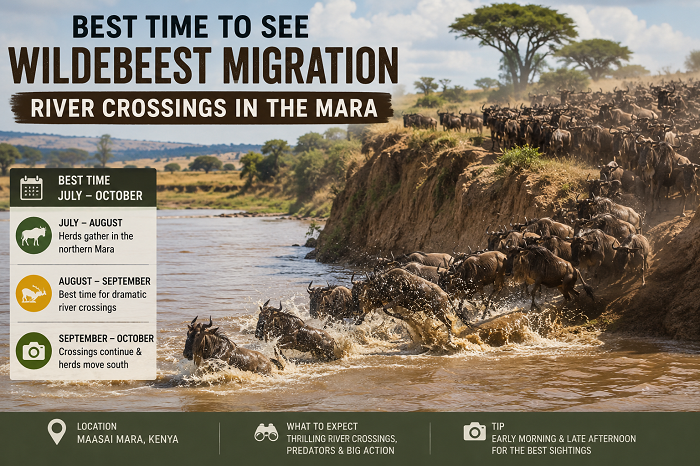
Few sights in the natural world compare to a Mara River crossing. Thousands of wildebeest gather on a muddy riverbank, hesitate, and then surge forward in a single chaotic wave while crocodiles wait beneath the surface. Anyone who has stood on the banks of the Mara during a crossing will tell you the same thing: photographs and videos never quite capture the noise, the dust, and the raw tension of the moment.
But here is the catch. Crossings do not happen on a schedule. There is no calendar you can check, no fixed date you can circle. The herds move according to rainfall, grass, and instinct, not human convenience. That unpredictability is exactly why so many travelers ask the same question before booking a trip: when is the best time to see it happen?
This guide breaks down the real timing behind the crossings, explains why some months offer far better odds than others, and gives you a practical plan for positioning yourself in the right place at the right time. If you are researching the wildebeest migration for the first time, this article picks up where general overviews leave off and focuses specifically on the river crossing window in the Mara.
Why the Crossings Happen at All
Wildebeest do not cross the Mara River for adventure. They cross because the grass on one side has been grazed down and the grass on the other side promises better grazing. The Serengeti ecosystem simply cannot sustain over a million wildebeest, hundreds of thousands of zebra, and hundreds of thousands of gazelle in one place for long. So the herds keep moving, and the Mara River happens to sit directly in their path as they push north into Kenya each dry season.
The river itself makes the crossing dangerous. Steep banks, strong currents, and a resident population of large Nile crocodiles turn what should be a simple river crossing into one of the most dramatic survival events in nature. Wildebeest often bunch up for hours, sometimes days, before the first animal finally jumps in. Once one goes, the rest follow in a rush, and that rush is what most visitors picture when they imagine the migration.
The Peak Window: July to October
If you want the highest probability of witnessing a crossing, plan your trip between July and October. During these months, the bulk of the herd has moved out of the Serengeti’s Western Corridor and pushed into the Northern Serengeti and the Maasai Mara, where the river crossings concentrate.
Within that broader window, August and September consistently produce the most crossings. By this point, large numbers of wildebeest have reached the northern bank of the river and continue moving back and forth across it as they search for fresh grazing on both the Kenyan and Tanzanian sides. It is common to watch a herd cross north in the morning and then cross back south a few days later, so patience during your stay pays off.
Early July can still be hit or miss, since herds are only beginning to arrive from the Grumeti River area further south. By late July, though, the numbers build quickly, and crossings become a near-daily possibility in the right locations.
October marks the tail end of the peak period. Crossings still happen, but the crowds thin out, temperatures stay warm and dry, and many experienced safari guides consider it an underrated month because you get similar action with fewer vehicles at each sighting.
Why Timing Alone Is Not Enough
Even during the peak months, no operator or guide can promise you will witness a crossing on a specific day. The wildebeest decide when they cross, not the safari industry. What timing does is shift the odds heavily in your favor. Visiting in August compared to visiting in April is the difference between a strong chance of seeing a crossing and almost no chance at all.
This is one reason working with an experienced ground team matters so much. If you are comparing african safari packages for this trip, look closely at how much time each itinerary allocates to the Mara River area itself, rather than just the wider Maasai Mara or Serengeti region. A package that spends three or four full days specifically along known crossing points gives you a meaningfully better chance than one that treats the river as a single afternoon stop on a longer route.
Guides who track herd movement daily, communicate with other camps by radio, and understand river crossing points can move you to the right spot within hours of a build-up forming. Independent travelers without local knowledge often miss crossings simply because they were parked at the wrong bend in the river.
Where Exactly to Position Yourself
Not every stretch of the Mara River sees regular crossings. A handful of specific points account for the vast majority of sightings, and knowing them helps explain why camp location matters so much.
On the Kenyan side, the areas around the Mara Triangle and the Serena crossing points see frequent activity, particularly from August through September. On the Tanzanian side, the Kogatende region in the Northern Serengeti sits close to several major crossing points and often offers quieter viewing with fewer vehicles competing for position.
Choosing a camp near one of these zones cuts down travel time significantly. Herds can appear, gather, and cross within a matter of hours, so a camp that requires a ninety-minute drive to reach the river puts you at a real disadvantage compared to one located just fifteen or twenty minutes away.
A Month-by-Month Snapshot
June marks the early build-up. Herds begin arriving from the Western Corridor, and the first river crossings, usually at the Grumeti River rather than the Mara, start to occur. This is a transitional month worth considering if you want smaller crowds and are willing to accept lower odds.
July is when Mara crossings genuinely begin. Numbers on the northern side of the river grow steadily throughout the month, and by the final two weeks, crossings become fairly regular in the right locations.
August and September represent the strongest window of the entire year. Large herds move constantly between the Tanzanian and Kenyan sides of the river, and multiple crossings in a single day are not unusual during peak activity.
October offers a quieter version of the same experience. Numbers begin to thin as some herds start drifting east and south again, but crossings still happen regularly, especially in the first half of the month.
November onward, the bulk of the herd has typically moved south, away from the river, marking the end of the crossing season until the following year.
Practical Tips for Maximizing Your Chances
Stay for more than one or two nights near the river. Crossings can take days to build up, and a short visit increases the risk of arriving just before or just after one occurs.
Spend full days out rather than short morning drives only. Many crossings happen in the middle of the day once herds have spent hours pacing the riverbank building courage.
Choose guides with strong local networks. Camps that share sightings information with neighboring lodges give guests access to real-time updates on herd movement.
Book well in advance. August and September fill up camps twelve to eighteen months ahead of time, particularly properties positioned directly along known crossing points.
Final Thoughts
There is no single guaranteed date for a Mara River crossing, but there is a clear window that maximizes your odds: July through October, with August and September standing out as the strongest months of all. Positioning yourself near a known crossing zone, staying long enough to let the herds do what they naturally do, and working with guides who track movement daily will do more for your experience than any calendar ever could.
If a river crossing sits at the top of your safari wish list, build your trip around this window rather than fitting it into whatever dates happen to be convenient. The herds will not wait for you, but if you plan carefully, you stand an excellent chance of watching one of the most extraordinary wildlife events on the planet unfold right in front of you.
Every year, travelers make the mistake of squeezing a Mara visit into a single night on a broader East Africa itinerary, then wonder why they missed the action that everyone talks about. A river crossing rewards patience far more than it rewards a packed schedule. Give yourself the time, choose a camp close to the action, and trust guides who read the herd’s behavior for a living. Do that, and the wait on the riverbank becomes part of the experience rather than a source of frustration.
Start planning early, keep your dates flexible where possible, and treat August and September as your primary target unless local conditions point elsewhere that year. The Mara River has been staging this spectacle for longer than anyone can measure, and with the right timing, you will get your turn to watch it happen.
About The Author