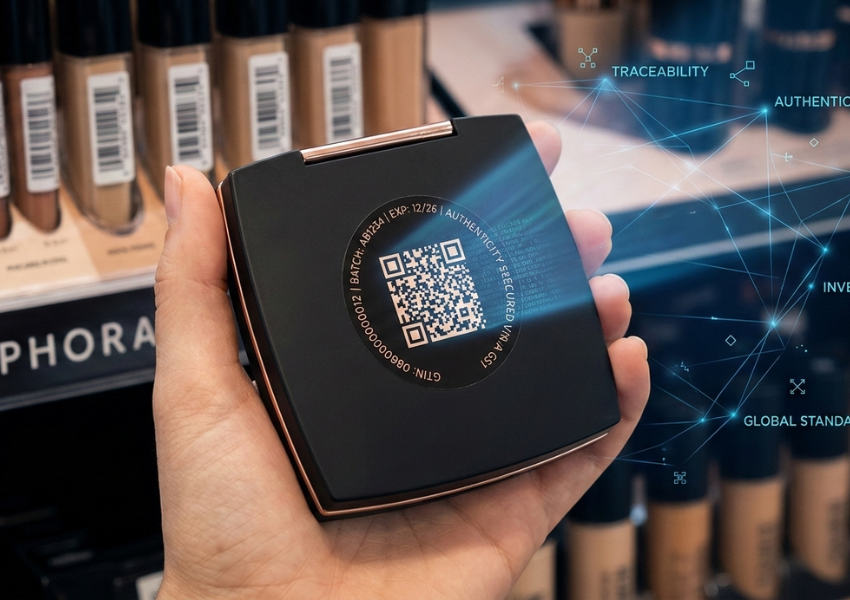
In the modern beauty landscape, we often discuss the “magic” of a formula the way a hyaluronic acid serum plumps the skin or how a matte liquid lipstick stays vibrant for sixteen hours. Yet, the most critical piece of technology in the entire beauty ecosystem isn’t a chemical compound; it is the makeup barcode.
From the sprawling manufacturing hubs of Seoul to the sleek shelves of Sephora in New York, the barcode is the universal language of the beauty trade. For a makeup brand, the barcode is the backbone of the business. For the consumer, it is a hidden seal of authenticity. This article explores the technical, legal, and functional depth of the makeup barcode and why it is the most important 1.5 square inches on any cosmetic package.
The Technical Anatomy of Cosmetic Identification
To understand the “makeup barcode,” one must first understand that it isn’t a singular thing. It is a data carrier. In the beauty industry, there are three primary types of codes that keep the wheels of commerce turning.
The UPC and EAN: The Retail Staples
Most makeup products sold in North America use the UPC-A (Universal Product Code). This is a 12-digit code that identifies the manufacturer and the specific product. In Europe and the rest of the world, the EAN-13 (European Article Number) is the standard.
Why does this matter for makeup? Because of SKU (Stock Keeping Unit) proliferation. A single line of foundation might have 40 different shades. Each shade requires a unique barcode. If a brand uses the same barcode for “Fair” and “Deep,” the inventory system will fail, the sales data will be corrupted, and the customer will likely receive the wrong product.
The GS1 Standard
The gold standard for makeup barcodes is the GS1 System. GS1 is the international organization that manages identification standards. When a makeup brand registers for a barcode, they receive a GS1 Company Prefix. This prefix identifies them as a legitimate brand and prevents “barcode squatting.”
Pro Tip for Brands: Never buy a barcode from a third-party reseller that isn’t GS1-authorized. It can lead to your product being rejected by major retailers like Sephora, Ulta, or Amazon.
Combatting the Global Counterfeit Crisis
The makeup barcode is more than a price tag; it is a shield. The beauty industry is one of the most counterfeited sectors in the world, with fake products appearing on every major e-commerce platform. For a consumer, the barcode is their first line of defense.
How Authenticity is Verified
When a consumer scans a makeup barcode using a verification app, they are checking a global database. A legitimate barcode links back to a GTIN (Global Trade Item Number) registered to the brand’s name. If the scan returns a generic “Shampoo” result for a “Luxury Foundation,” it’s a clear red flag.
The Role of 2D Data Matrix Codes
The beauty world is shifting towards 2D Data Matrix codes. Unlike the traditional linear barcode, these tiny squares can store thousands of characters of data. Many high-end luxury makeup brands now use 2D barcodes to include:
- Unique Serial Numbers: Every single bottle can have its own ID.
- Batch and Lot Numbers: Critical for product safety.
- Expiration Dates: Vital for cosmetic efficacy.
This level of detail is impossible with a standard 1D barcode and is the “gold standard” for brand protection today.
The Supply Chain: From Factory to Face
How does a makeup barcode manage the complex supply chain of a global beauty brand? To understand this, we must look at the life cycle of a cosmetic item.
Stage 1: Manufacturing and Batching
When a batch of mascara is produced, the barcode allows the manufacturer to track the raw materials used. If a specific pigment is later found to be contaminated, the barcode allows the brand to identify exactly which products contain that ingredient and pull them from the shelves immediately.
Stage 2: Logistics and Warehousing
Makeup is a perishable good. Many products have a “Period After Opening” (PAO) or an “Expiration Date.” Barcodes allow warehouse management systems (WMS) to use FEFO (First Expired, First Out) logic. This ensures that the freshest stock is always sent to the consumer.
Stage 3: The Retail Floor
At the retail level, barcodes allow for real-time inventory management. When a customer buys a palette, the barcode scan tells the store to order another one. This prevents the “Out-of-Stock” scenario that frustrates shoppers and leads to lost sales for the brand.
Semantic Optimization: Makeup Barcodes and SEO
From an SEO perspective, the term “makeup barcode” is a high-intent keyword. Users searching for this term are often:
-
Beauty Entrepreneurs: Looking for technical guidance on how to label their products.
-
Skeptical Consumers: Searching for ways to verify the authenticity of a product.
-
Retail Professionals: Managing inventory in the beauty sector.
By optimizing for semantic entities like “GTIN,” “Product Identification,” “Cosmetic Labeling Regulations,” and “Inventory Tracking,” your website becomes an authoritative hub for beauty-tech information.
Regulatory Compliance and Labeling Laws
In many regions, including the European Union (EU) and the United States (FDA), the presence of a barcode is part of a broader set of labeling requirements. A makeup barcode must be placed in a way that is easily scannable and does not obscure the Ingredients List (INCI) or the Safety Warnings.
FDA and EU Regulations
The FDA requires that cosmetic labeling be clear and not misleading. While a barcode is not strictly mandated by the FDA for all small producers, it is practically required for any brand that wants to scale into retail. In the EU, the Cosmetic Regulation (EC) No 1223/2009 requires full traceability throughout the supply chain—a task that is impossible without a standardized barcode system.
QR Codes vs. Barcodes
Many brands are now using a combination of a standard UPC barcode (for retail) and a QR code (for the consumer). When a user scans the QR code, they can:
- Watch Tutorials: See a video of how to apply the product.
- Try On Virtually: Access AR filters that show the makeup on their face.
- Reorder in One Click: Link directly to a subscription service.
This “Smart Packaging” is revolutionizing how brands build loyalty. The barcode is no longer just a technical tool; it is a marketing asset.
Sustainability and the “Green Barcode”
Sustainability is the biggest trend in the beauty industry. Consumers want to know if their makeup is vegan, cruelty-free, and packaged in a way that doesn’t harm the planet.
Transparency at Your Fingertips
Scan-and-know apps have turned the makeup barcode into a transparency tool. Apps like Think Dirty or EWG Healthy Living use the barcode to provide a “cleanliness” rating. This has forced brands to be more honest about their formulations.
Furthermore, barcodes are being used to track the Circular Economy. Some brands offer a “Return to Recycle” program where the barcode on the empty container is scanned to give the customer a discount on their next purchase. This turns the product’s “death” into a new “birth” for the brand-consumer relationship.
Troubleshooting Common Barcode Issues in Beauty
For the beauty brand owner, nothing is worse than a barcode that won’t scan. This can lead to massive fines from retailers and lost sales.
Why Barcodes Fail in Makeup
- Reflective Packaging: Many luxury makeup brands use gold or silver metallic packaging. This can confuse the laser of a barcode scanner.
- Curvature: Tiny items like eyeliners or lip pencils have a high degree of curvature. If the barcode is too large, it wraps around the product, making it impossible to scan in one go.
- Color Contrast: Some brands try to match the barcode color to their aesthetic (e.g., white lines on a pink background). For a barcode to scan reliably, it must have a high degree of contrast ideally black lines on a white background.
Conclusion: The Invisible Foundation of Beauty
The makeup barcode is the unsung hero of the beauty world. It protects the brand’s bottom line, ensures the consumer’s safety, and keeps the global supply chain moving with surgical precision. Whether you are a brand owner looking to scale, a developer building a beauty app, or a curious consumer, understanding the power of that small, striped code is essential.
As we move into a future of more personalized, more transparent, and more digital-first beauty, the makeup barcode will continue to evolve—from a simple price tag into a complex, data-rich key to the entire cosmetic universe.
Key Takeaways
- Accuracy is King: Every makeup shade must have its own unique GTIN.
- Safety First: Barcodes are essential for batch tracking and recall management.
- Future-Proofing: 2D barcodes and QR codes are the next step in consumer engagement.
- Legitimacy: Always use GS1-certified barcodes to ensure retail compliance and consumer trust.
Authoritative Semantic Keywords Included:
- Makeup Barcode
- GTIN (Global Trade Item Number)
- UPC vs EAN
- Cosmetic Inventory Management
- Batch Code Verification
- Counterfeit Beauty Prevention
- GS1 Standards
- Smart Packaging
- Supply Chain Traceability
- Sustainable Cosmetic Labeling
About The Author

Leave a Reply